
Unfiltered Africa is BACK with another episode featuring singer/songwriter, Awu! 🔊🔥 With this video series, we chat with some amazing Symphonic artists and get a closer look at everything they’re working on, personal stories, passion projects and so much more. Read the full interview below…
Unfiltered Africa: Full Interview with Awu
Daphne Barquin (DB):
“Welcome, Awu! For you, what’s the heart and soul of Makossa music? And how do you translate its essence into your modern sound?”
Awu (A):
“Makossa has a very organic sound. In the past, all the artists that sang the Makossa music were very organic with their flow and 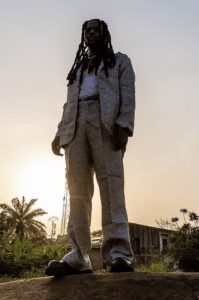 rhythm. But what I tap into from Makossa is the vibe. For example, I could be singing on a beat, a foreign beat, but my flow on it still has that Makossa vibe. That way I fuse the genre in such a way that can connect and cut across genres.”
(DB):
“What’s your favorite part about performing live? What kind of energy do you try to create for your audience?”
(A):
“Personally, I love when my voice is being heard and the feeling that comes from the music. I also like to give my instrumentalist the chance to express that feeling how they want to. I love expressing that feeling together. I also like to connect with the crowd to know what part of the sound really resonates with them, you know. I haven’t really had many performances like that yet, but the number of performances that I’ve had, I noticed that people always just get into the vibe of the music.”
(DB):
“Nice! Well, hopefully you got more opportunities to perform and experience that live.”
(A):
“We love the heat on stage. I just like being in that moment and getting the feel of the crowd and chanting together, connecting with them, getting to see what they like and all that.”
(DB):
“How does the global rise of Afrobeats impact your music and kossa-fusion’s place in the world?”
(A):
“It has impacted a lot based on mentality. Because before this era, African music was not really what it is today in terms of global positioning. And this has inspired artists like myself from Cameroon to support the system of Afrobeat with another sound called kossa-fusion. This is my own way of contributing to what the Afrobeat scene is right now, and the Amapiano as well. The sound is getting out there, so this is a way of supporting the sound and keeping the culture alive.”
(DB):
“Nice! I’d also love to know who is someone outside the music industry that inspires you creatively? And why do they resonate with you?”
 (A):
(A):
“There are many of them… Kwame Nkrumah. During the times when the African continent started having their independence, the high life music started from that period and started getting popular. I realized that high life music had a major role to play in the musical culture of Africa at the time, and it was at that era that had a lot of impact for me”
(DB):
“That’s very inspiring. On another note, can you describe your songwriting process? Like, do you have any rituals or practices that help you tap into your creative flow?”
(A):
“It’s not really like a ritual, but it does depend on the vibration and how I’m feeling in the moment. There are times I want to write music at home and just take my guitar and start strumming. There are also times where I just want to go to the studio with the producer and just tell him I want to create something together and make it happen. I just like creating music rather than just following a set genre. Like, just feel it out and see what happens. Sometimes I just want to freestyle, develop it, then the music just comes out.”
(DB):
“What a great process you have. It definitely seems natural for you. If you could perform for one person, alive or dead, who would it be and why? What song would you choose to perform for them, too?”
(A):
“That’s quite a tricky question. I have many people I want to perform to. I’d love to perform to my late father, in fact my parents. I would like to perform to my parents and my family… But you just said one. If you gave me the option of maybe five people, I could definitely name five people. Like Bob Marley, my parents, my neighborhood, too.”
(DB):
“What a great answer…. My last question for you is easy. What can your fans expect from you this year?”
(A):
“I haven’t been dropping a lot of music since the album, but we’re definitely stepping back into the scene. Last year, we dropped just a single, “If You Can Can”, and it’s doing really well. So we decided to start the month of March by dropping a new single, “Point of View”, and guys, go check it out! You can go check it out on the 15th, and then we start dropping a lot of singles this year and continue up until next year 2025, then we’ll see how it goes from there.”
“This year, there’s a lot of fun, a lot of music, and a lot of new experiences… like working with Symphonic which has been a great experience.”
(DB):
“That makes us so happy to hear! You know what, we have one bonus question for you… Tell us your favorite Cameroonian dish, a hidden gem in your Southwest region. We’d love to know.”
(A):
“Bitter leaf, for sure. It’s a vegetable. There’s two types, one more sweet than the other. They use it to cook something very delicious and very popular in Cameroon, called Ndole. It’s delicious and it comes from my village!”
//


